
Every Bite began with a simple question: what would it take to help households waste less food? Three years later, we have a much richer answer.
Over the past three years, Every Bite has brought households, communities, local Hubs, chefs, community partners and behaviour change practitioners together to explore how we can build more resourceful relationships with food.
Now, as the programme comes to the end of its initial three-year journey, we’re sharing the Every Bite Final Learning Report.
From a pilot to a national programme
Every Bite began in 2023 as a pilot involving four place-based Hubs. Over the following three years, it grew into a national programme combining local, place-based delivery with online participation, school-based activity and community partnerships.
At its heart was a four-week experience designed to help people understand their own food waste and try simple actions at home.
These included:
measuring household food waste
setting up an Eat Me First shelf
taking part in a weekly Use It Up meal or fridge challenge.
But the programme was never just about giving people a list of tips. The idea was to create an experience that helped people appreciate their food, feel more resourceful and discover practical changes that could become part of everyday life.
An animated summary of the Every Bite journey
We learned that behaviour change is social
One of the strongest findings from the three-year programme is that behaviour change doesn't happen in isolation.
The most effective experiences combined practical action with relationships, shared food, trusted messengers and a sense of belonging.
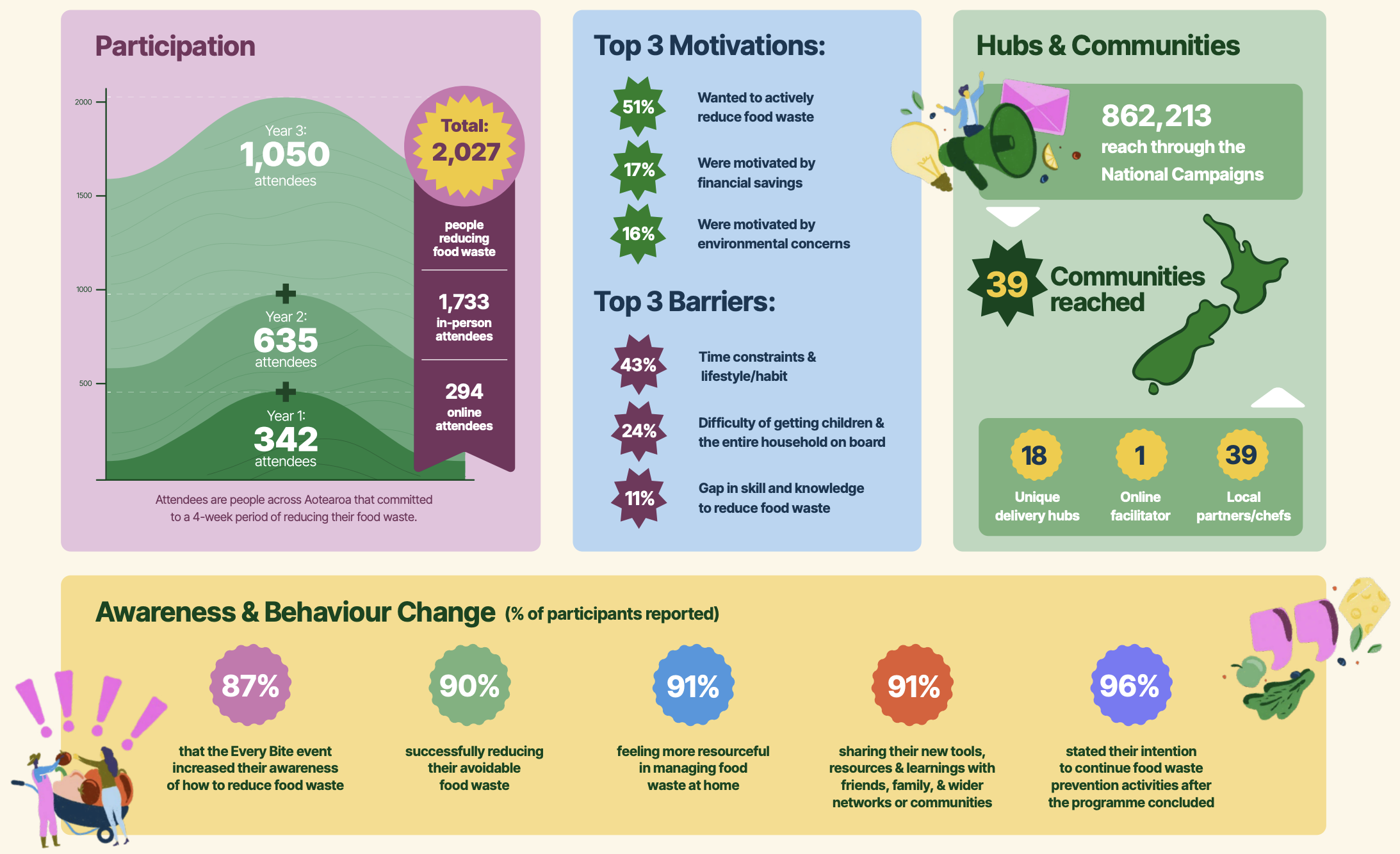
Across the programme, more than 90% of participants reported successfully reducing their avoidable food waste. 91% felt more resourceful in managing food waste at home, and 91% shared what they learned with family, friends or their wider networks.
Shared kai was an important part of this.
In Year Three, 27% of in-person participants identified sharing kai as the most enjoyable part of the workshop experience. The report found that food appreciation, creative cooking and culinary inspiration helped reduce the shame associated with food waste and created a more positive environment for change.
Rather than starting with “you’re wasting too much food”, Every Bite found that there is power in starting with “let’s appreciate what we have and see what we can do with it.”
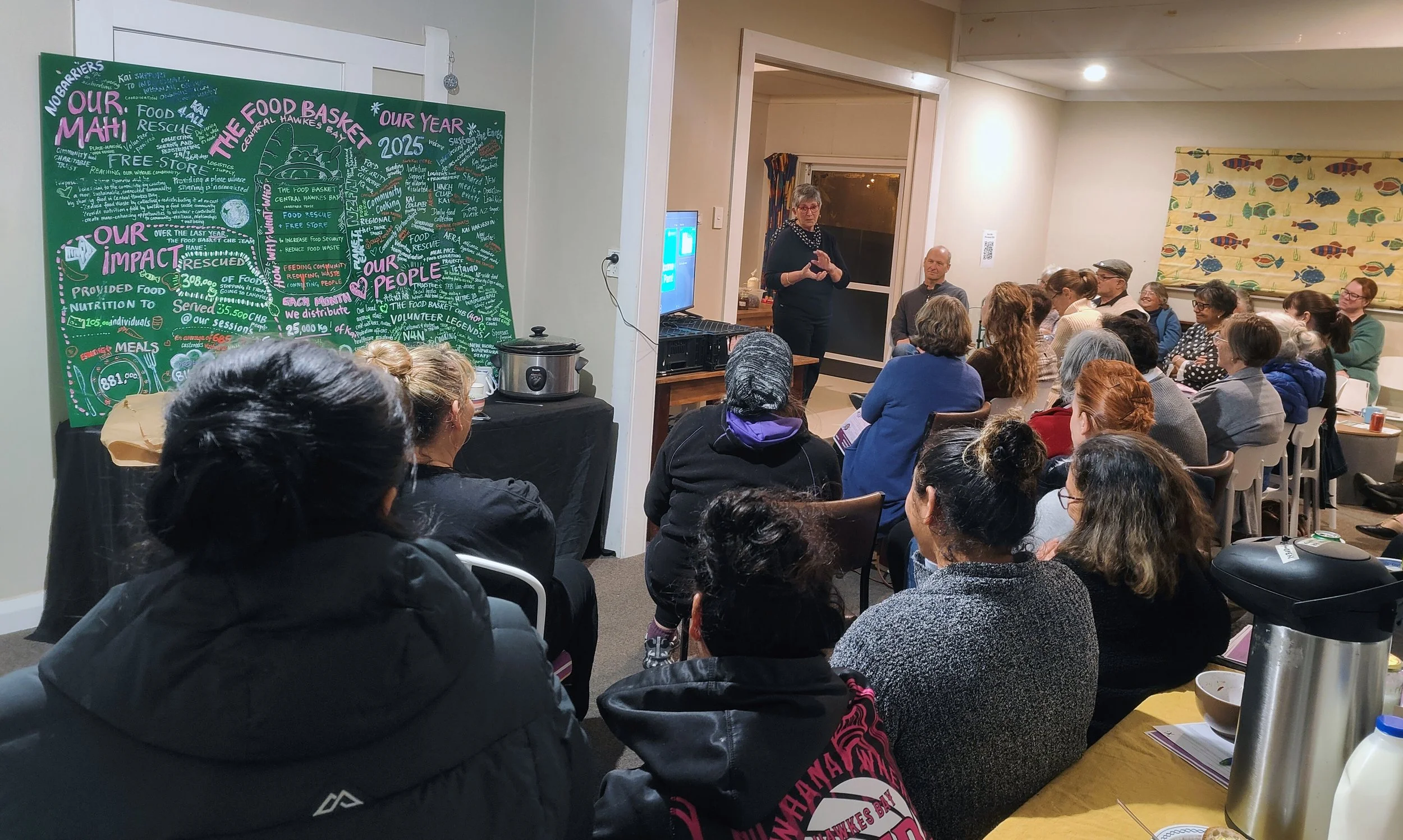
Sustainable Hawke’s Bay Every Bite event 2026
Local relationships made the difference
Every Bite tested different ways of reaching and supporting people, including national campaigns, online programmes, schools and local community delivery.
The clearest learning was that national reach and local trust play different but complementary roles.
National communications can create awareness and credibility. Local Hubs bring the relationships, cultural relevance and ongoing connection that help people participate and keep going.
The programme’s community partners and chefs were particularly powerful in this respect.
100% of Year Three community partner respondents said they were committed to supporting any future Every Bite events. Local chefs and restaurants helped turn food waste prevention into something practical, creative and enjoyable, while partnerships also opened up new audiences for Hubs.
The online programme showed what scale can look like
Online delivery allowed Every Bite to reach beyond the geographical footprint and capacity of physical Hubs.
It also taught us something important: digital doesn't automatically mean disconnected.
The strongest online engagement came when digital channels were actively facilitated and felt like a community, particularly through WhatsApp groups. Email was also effective at keeping people informed and engaged.
The opportunity for the future is to connect digital and local.
The report recommends using online participation as a pathway into local communities, activities and the wider sustainability ecosystem.
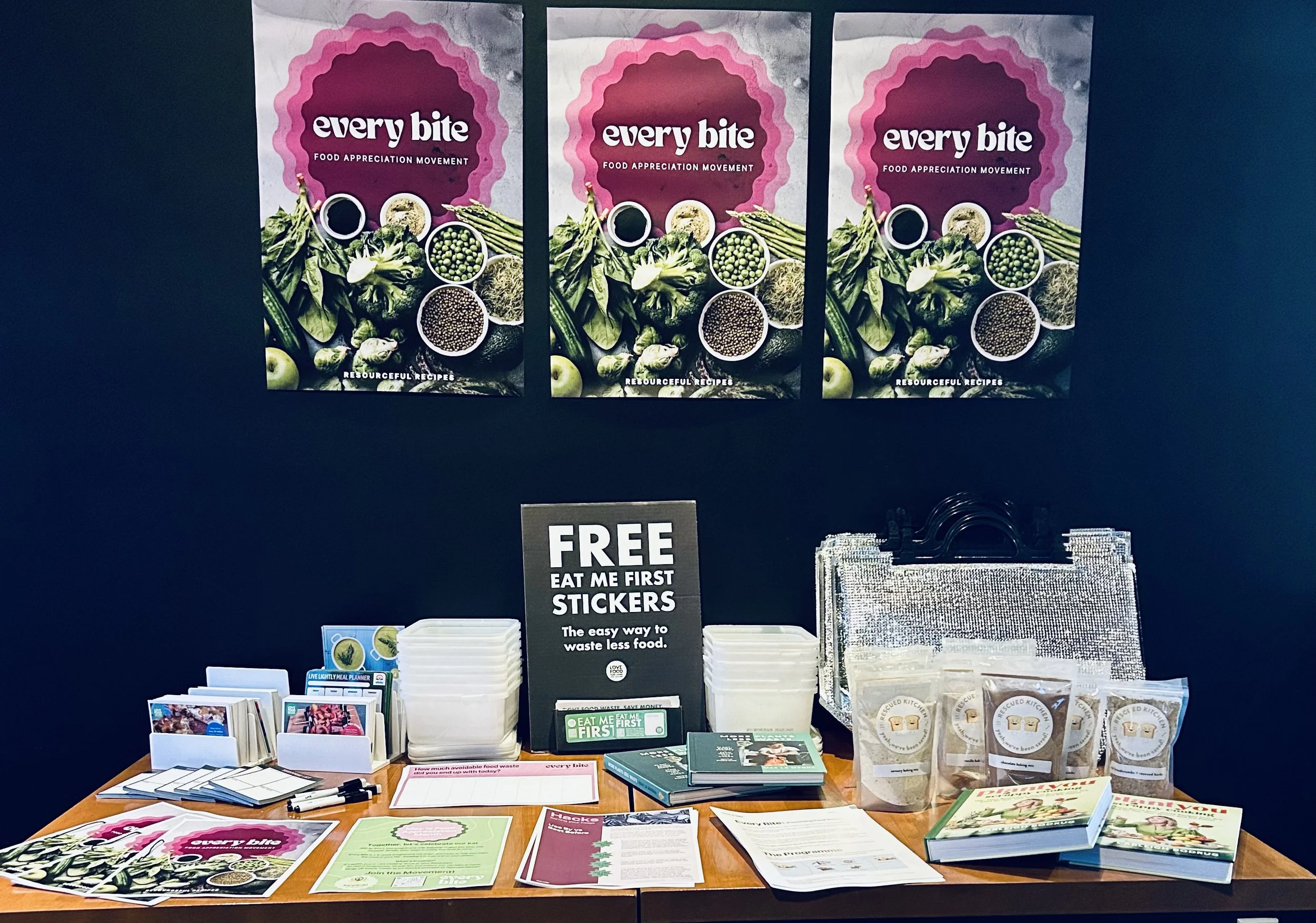
Display at a Kaipātiki Project Every Bite event in 2025
The real test is what happens afterwards
Perhaps the biggest learning from Every Bite is also the biggest challenge.
Getting someone to try a new behaviour is one thing. Helping it become part of everyday life is another.
The programme found encouraging evidence that participants continued food-saving behaviours beyond the formal four-week programme. However, it also found that Every Bite did not yet have a sufficiently structured pathway for sustaining, measuring and nurturing that change over the longer term.
And when the programme tested different approaches to staying connected, one finding came through strongly: local relationships matter.
Centralised emails and cold text messages generated relatively low response rates, while check-ins from trusted local facilitators through private community channels created much richer engagement.
The takeaway from this is to prioritise and resource time for supporting those local connections.
What would we take forward
The Final Learning Report makes eight recommendations for a future Every Bite 2.0. Among them:
Combine national reach with local trust. Use national communications to create awareness and local communities to create change.
Design for the mainstream. Meet people where they are, with messages around saving money, saving time, reducing stress, making family life easier and enjoying food more.
Make participation frictionless. Design around real lives, with flexible participation, practical content and pathways beyond the programme.
Invest in the relational layer. Resource the people who facilitate, connect and nurture communities.
Give Hubs a framework, but let them make it local. Centralise the things that benefit from consistency, while leaving room for local knowledge and relationships.
Make cultural inclusion part of the design. Not simply a recruitment tactic, but something built into how the programme is developed and delivered.
Build the ecosystem around the programme. Connect Every Bite with other food waste and sustainability initiatives rather than treating it as a standalone intervention.
Use evidence to build collective intelligence. The MEL framework developed through Every Bite could potentially contribute to a wider shared evidence base for food waste prevention in Aotearoa.
A programme can end - for now - without the learning ending
The most interesting thing about the Every Bite journey is that its legacy isn't simply the number of people who took part.
It's the capability built across the network, the recipes, tools and stories, the relationships between Hubs, and it's the community champions who carried the message further.
And it's the growing understanding of what it takes to make behaviour change practical, positive and connected to people's real lives.
The report argues that Every Bite can be a gateway into a broader sustainability journey, connecting people to a wider movement and organisations to a wider ecosystem.
So this isn't a full stop, it's a handover.
We're making the Final Learning Report and 2026 Recipe Book available so that others can use the ideas, build on the learning and keep the conversation moving.
Because if there's one thing three years of Every Bite has taught us, it's this: change sticks when people can make it practical, make it social and make it their own.